Written by Horacio Méndez, President & CEO, Woodstock Institute. Letter to the editor originally published in the Chicago Sun-Times on October 14, 2026.
A recent proposal by the Department of the Treasury and the Federal Deposit Insurance Corporation threatens to undermine the 1977 Community Reinvestment Act. This proposal effectively serves as a federal disinvestment plan for housing, small businesses and nonprofits, directly contradicting Congress’ recent passage of the 21st Century ROAD to Housing Act, which was designed to incentivize community investments. Even the Federal Reserve has refused to support the proposal.
Under the proposal, 40% of banks in Illinois would lose their regulatory mandate to finance affordable housing, small businesses or local social services. Furthermore, 62% of the 81 largest banks serving Illinois would no longer be held accountable for maintaining physical branches, volunteering or investing in low-income areas. Suburban and rural community banks would have no obligation to reinvest local deposits back into their communities. This shift could cost Illinois communities billions of dollars in critical infrastructure, entrepreneurship, subsidized housing, childcare and healthcare loans.
The proposal achieves this by significantly raising the asset threshold required for a financial institution to be classified as a “large bank.” By reclassifying hundreds of institutions as “medium” banks, the rule applies much lower regulatory standards. According to data from the National Community Reinvestment Coalition, several prominent Illinois institutions — including Wintrust Bank, Byline Bank, First Mid Bank & Trust, Old Second National Bank and Heartland Bank & Trust — would be downgraded to this medium tier. Compounding the issue, the proposal allows these institutions to fail Community Reinvestment Act lending metrics for homes, small businesses and small farms while still receiving a passing grade of “satisfactory” under the law.
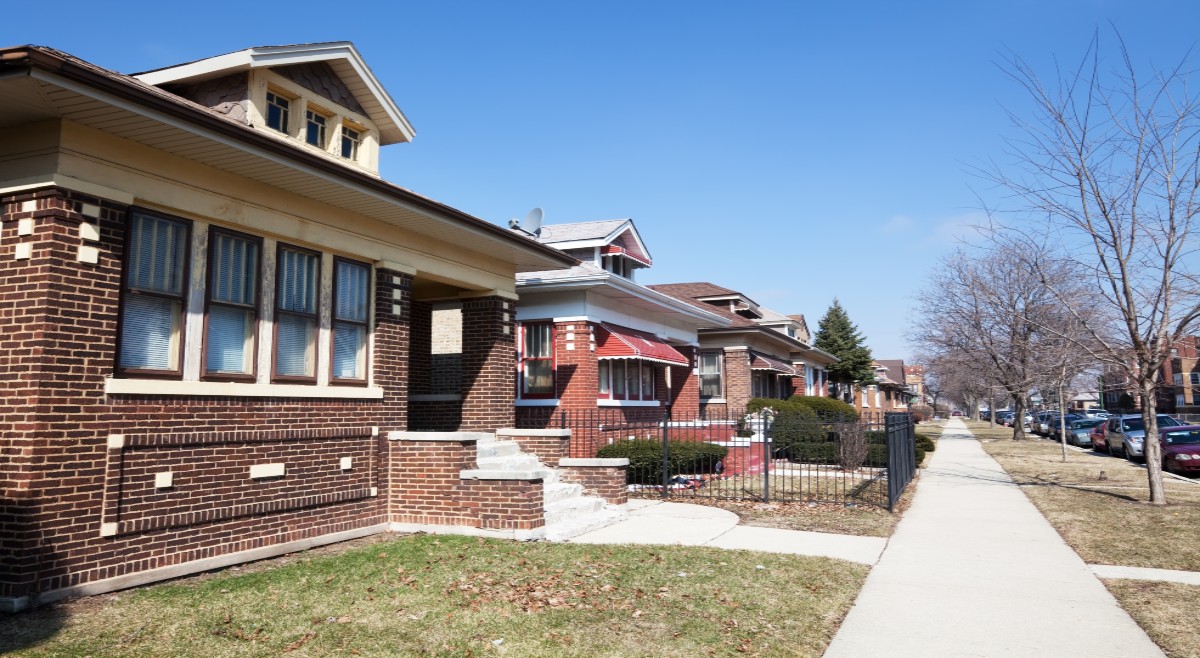
The Community Reinvestment Act was originally born out of Chicago’s community-organizing movement to combat contract selling, block-busting and redlining. Organizations like the Woodstock Institute have spent decades ensuring that banks equitably serve the communities where they operate and take deposits. Instead of allowing financial institutions to do less, Illinois residents and communities must demand that these institutions remain fully accountable and continue to provide the financial products and services required for local economies to thrive.