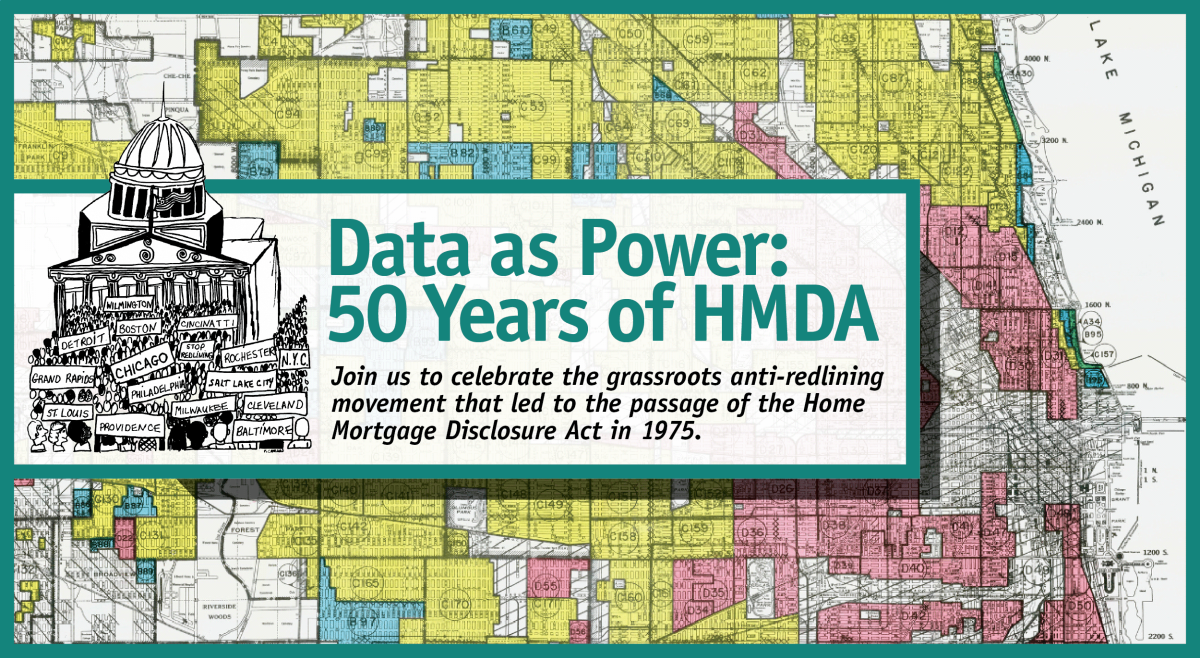
The lending markets in Chicago, Cook County, and the seven-county Chicago-region have undergone significant shifts between 2021 and 2023, reflecting broader economic forces and persistent inequities across race and income. Black and Latine borrowers faced persistently higher denial rates, lower approval rates, and steeper loan costs relative to property values, compared to White borrowers. Drawing on three years of data, this analysis explores trends for loan applications, originations, denials, and loan costs, focusing on racial disparities in lending. This data can inform various efforts and initiatives focused on increasing homeownership for historically marginalized Black and Latine communities, investing in neighborhoods negatively impacted by redlining, and growing racial wealth.
These data are from the Woodstock Institute Community Lending Data Portal. This portal includes Home Mortgage Disclosure Act (HMDA) mortgage lending data, Community Reinvestment Act small business lending data, United States Census Bureau American Community Survey socioeconomic and housing characteristics, Federal Deposit Insurance Corporation bank branch data, United States Postal Service active and vacant business address data, and Record Information Systems foreclosure data. The racial characteristics of applicants and borrowers are usually self-reported and may undercount intersectional identities.