Introduction
The results of the 2024 national and local elections guide Woodstock Institute’s efforts in two distinct ways – harm reduction and connecting with low- and moderate-income people, especially Black and Latine communities. While the presidential election showed a surprisingly strong shift “right” by many of our constituents, local elections and ballot measures were more progressive in some areas, even in traditionally conservative districts and states. Therefore, much of Woodstock Institute’s work continues to be relevant in the day-to-day lives of our constituents – access to capital, combatting financial exclusion, reducing financial exploitation, and wealth preservation and/or growth. As such, the following priorities have been identified for 2025.
Research
Community Lending Data Portals
Woodstock Institute’s Community Lending Data Portals continue to evolve. We will use feedback from current and past stakeholders to further understand user experience, program outcomes, and community lending research needs to update Chicago/Illinois Community Lending Data Portal. These upgrades may include visualizations, additional data points, or other graphics.
We will expand Community Lending Data Portals for Housing Opportunities Made Equal in Cincinnati, Ohio, and the Metropolitan Milwaukee Fair Housing Council in Wisconsin, as well as update the Fair Housing Center of Central Indiana’s portal.
Community Lending Data Capacity Workshops
The goal of Woodstock’s data capacity workshops is to “democratize” home mortgage and small business lending data and provide data analysis training to community stakeholders. Through connecting community-based organizations with the necessary tools to evaluate financial equity in their areas, they can identify the specific interventions, services, and programs their neighborhoods need.
The workshops will enable us to attract, recruit, and retain a network of community members who will serve as our “bridge to the community,” while we serve as their community lending researchers and advocates. Through these partnerships, we can collect stories and case studies that reinforce community assessments, support our research and policy work as well as to develop long-term connections with, and commitments to, enhancing the impact of community organizations.
Research Reports, Articles, & Publications
Woodstock Institute will update data points from our 2019 report, Patterns of Disparity: Small Business Lending in Illinois. Our ongoing Community Reinvestment Act (CRA) data analysis may include the impact of the COVID-19 pandemic, small business lending trends, unbanked and underbanked statistics, policy implications, and other data points. We will also publish resources to support the use of the Community Lending Data Portal, community fair lending analysis, and new economic justice and racial equity research.
Home Mortgage Disclosure Act Analysis
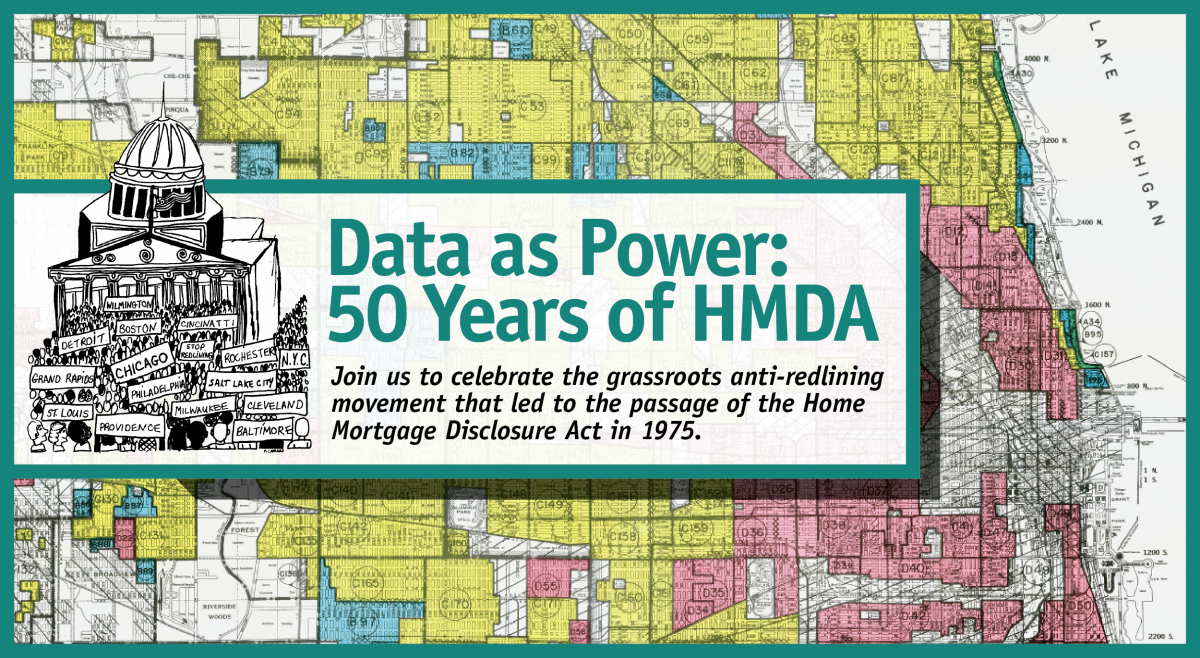
Woodstock expects that the Federal Financial Institutions Examination Council, the US Department of Housing & Urban Development, and the Department of Justice’s enforcement of anti-discrimination laws like redlining, fair lending, fair housing, equal credit opportunity and the CRA will not be as aggressive over the next four years. As it relates to the City of Chicago, the State of Illinois and the Midwest, Woodstock Institute will step in and compensate by increasing our focus on Home Mortgage Disclosure Act analysis, bank branch locations, and other redlining / fair lending analysis.
Financial Services Industry
Given the dynamic nature of the financial industry ranging from consolidation in the banking sector, financial technology and/or crypto-currency companies attempting to start or purchase banks, and more credit unions acquiring community banks, Woodstock Institute will:
- Monitor regulatory reports, press releases and media announcements regarding branch openings, closures, or changes in financial institution ownership due to a merger or acquisition,
- Assess which applications require our attention based on a combination of factors including, but not limited to the population and community being served by the institution, its branch distribution, product offerings, lending performance, access to other financial institutions within the same community, and its performance with consumer protection and anti-discrimination laws,
- Deploy the research and policy resources necessary to engage when our data and analysis shows a harmful community impact including, but not limited to, direct outreach to financial institutions and their regulatory agencies, protested applications when applicable, publication of findings in relevant media, and the mobilization of community organizations and/or elected officials in public and visible campaigns when justified.
Legislative Policy
State-Level Consumer Financial Protection Bureau
The robust consumer financial protection landscape that the State of Illinois has built over the last few years was supported by a progressive national landscape created by the Consumer Financial Protection Bureau (CFPB). The likely reduction in funding to this federal agency, and an equal reduction of its enforcement activity suggest that Illinois may stand as one of only a handful of states with a strong consumer financial protection infrastructure.
Given the importance of the CFPB and the precedent set by the State of California, Woodstock Institute will take initial steps to introduce and advocate for legislation that would create a state version of the CFPB to expand the scope and authority of the Illinois Department of Financial and Professional Regulation (IDFPR).
Small Business Financing Transparency
Woodstock Institute’s efforts to pass legislation mandating the disclosure of interest rates for small business loans made considerable progress in 2024 as evidenced by the passage of the Small Business Financing Transparency Act in the Illinois Senate. Along with our coalition partners and lead Senate Sponsor Senator Christopher Belt, we will continue to garner sufficient industry and political support to overcome obstacles in the Illinois House. These efforts will include negotiations with bill opponents and education-related outreach to key stakeholders regarding the costs and benefits of small business loan disclosure. In partnership with a coalition of small business and consumer advocacy organizations, the steps to transform the small business lending landscape include:
- Register/license non-bank small business lenders at the state level, and
- Require disclosures to small business borrowers similar to the Truth in Lending Act so they can make an “apples-to-apples” comparison between loan products and make informed decisions about their business finances. (Banks and credit unions would be exempt.)
Protect the Predatory Loan Prevention Act (PLPA)
Woodstock Institute will continue its active diligence to eliminate legislative threats by the predatory lending industry aiming to weaken the Predatory Loan Prevention Act.
Other Legislative Policy Priorities
Regulatory Policy
Mortgage Access Initiative
In 2022, Neighborhood Housing Services of Chicago and Woodstock Institute began the Mortgage Access Initiative (MAI), convening representatives from various mortgage lenders (banks, credit unions and mortgage companies) to share their expertise on the mortgage process and reimagine it through pragmatic industry, policy and regulatory recommendations. The first phase focused on the lender side of the process by creating a detailed process map which identified intersection points with other important stakeholders, e.g. appraisers, real estate professionals, and the government-sponsored enterprises, e.g. Fannie Mae and Freddie Mac. Phase 1 concluded with three primary recommendations:
- Create a realistically achievable equitable lending product,
- Ensure Federal Housing Administration (FHA) loans only go to borrowers who are ineligible for conventional/conforming loan products, and
- Address loan officer compensation structure and optimize relationships with housing counselors.
Phase 2 of the MAI will have a similar structure but focus on the real estate industry. We will work with partners to identify experienced and diverse real estate professionals to participate in closed-door discussions focused on creating better outcomes for low- and moderate-income (LMI) and borrowers of color. Like Phase 1, recommendations resulting from these stakeholder meetings will be released in a report and press conference.
Training and Implementation of the Illinois Community Reinvestment Act
In partnership with Housing Action Illinois and IDFPR, Woodstock Institute will coordinate and conduct Illinois-CRA training for financial institutions and non-profit organizations throughout the state that are covered by the law. We will create training materials, guides and videos and make them accessible via the internet.
Stop Predatory “Rent-A-Bank” Lending
We will oppose “Rent-a-Bank” efforts by predatory lenders that partner with out-of-state banks to utilize that state’s interest rates, thereby illegally circumventing the Illinois Predatory Loan Prevention Act’s 36% APR cap on consumer loan
Small Dollar Loan Initiative
In support of our work addressing the predatory lending industry in Illinois and inequitable access to traditional banking products for LMI individuals, our Small Dollar Loan Initiative aims to identify and support safe and affordable products and services that enable LMI individuals to achieve financial stability. Our work will include the following activities:
- Rebuild the small-dollar loan process in Illinois to increase access for LMI borrowers and consumers of color, in coordination with financial institutions, nonprofit organizations and affected individuals,
- Map the entirety of the loan process and identify points in the process map where disparities exist,
- Conduct an outreach campaign of affected neighborhoods to survey and collect stories from consumers,
- Research trends, gaps, and relevant issues,
- Identify policy, regulatory, market or third-party influence issues,
- Work with financial institutions (both for-profit and non-profit) to fill financial product and service gaps and conduct outreach to educate/provide resources for consumers on alternatives to predatory loans.