Plan includes specific commitments for Illinois to preserve and create jobs
*Interviews available upon request*
For Immediate Release:
July 17, 2024
Contact:
Robert Mayo
hello@woodstockinst.org | (312) 368-0310 x 2024
CHICAGO – Today, as part of its proposed acquisition of Illinois-based Discover Financial Services, Capital One announced a five-year, $265 billion Community Benefits Plan (CBP) to channel investments towards philanthropic efforts and increase access to financial services for underserved communities, including low- and moderate-income neighborhoods (LMI) and communities of color. The new CBP is twice as large as any plan before it. By comparison, U.S Bancorp’s 2022 $100 billion CBP was considered the largest CBP to date prior to this announcement.
Horacio Méndez, President and CEO of Woodstock Institute, one of four advocacy organizations directly involved in negotiating the CBP, stated:
“We do not need another empty promise, a splashy marketing campaign, or a re-packaging of existing activity as something new. Woodstock Institute came to the table to challenge Capital One to develop a community benefits plan that moves the financial industry forward and sets an ambitious standard for others to follow. While nobody got everything they asked for, everyone involved in this process recognizes that substantive change and progress have been made on important issues.
“Capital One’s commitment to fair and responsible lending, and to collaborate on advocacy issues and policies, represents a key step forward for efforts at advancing equity in our financial sector.”
The CBP includes the following commitments:
-
- $200 billion in lending to low- and moderate-income (LMI) consumers and consumers residing in LMI communities, including $125 billion in credit card lending and $75 billion in automobile lending.
-
- $44 billion in community development financing, including over $35 billion supporting affordable housing.
-
- Among an array of new and enhanced financial products, a new credit card that will connect small businesses traditionally underserved by the financial sector with below-market-rate capital. Addressing racial and economic disparities in access to small business financing has been a key legislative priority of Woodstock’s this year.
Specific to Illinois, the CBP includes the following commitments:
-
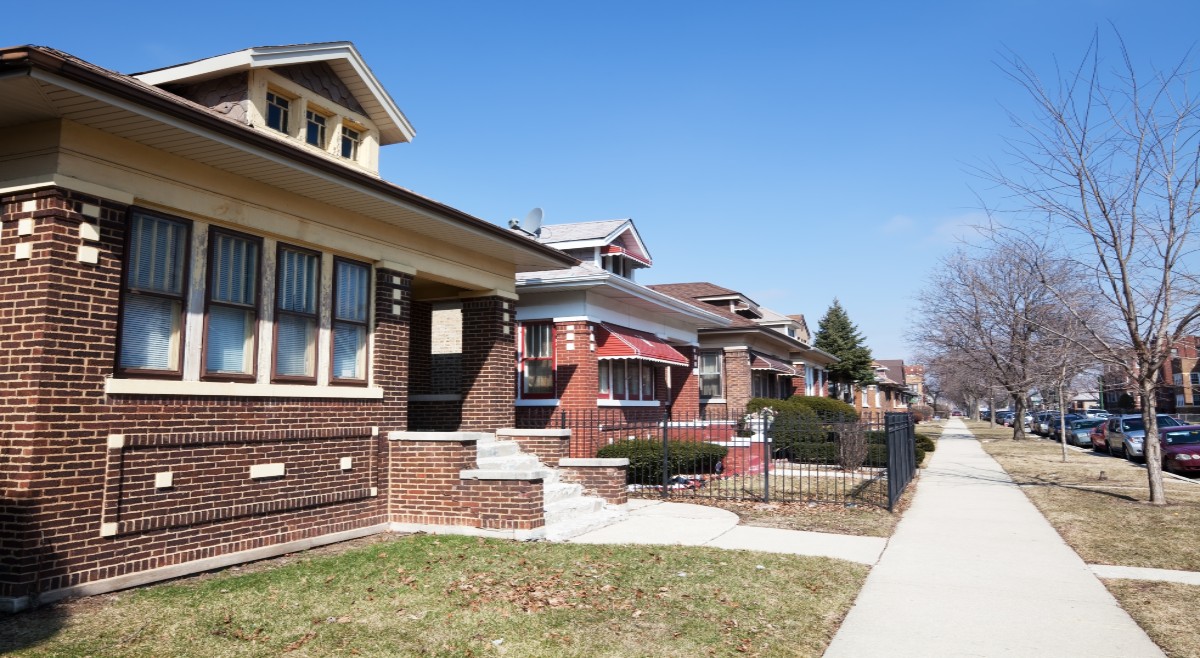
- Discover’s Customer Care Center in the Chatham neighborhood on the South Side of Chicago, which currently employs around 600 individuals, will remain open and will not be negatively affected by the acquisition. In fact, Capital One has committed to growing the facility to 1000 jobs.
-
- Capital One, which currently has three “cafes” in Illinois (all in Chicago), has committed to opening two new cafes in Illinois: one in a lower income community in Chicago and one in a lower income community in East St. Louis. Each cafe employs approximately 14 people. The acquisition will not result in the closure of any Capital One retail locations in Illinois.
-
- $20 million of a total nationwide commitment of $575 million in philanthropy over a five-year period will be invested in Illinois.
State Senator Elgie Sims, whose district is where the Discover Call Center is located, said, “I want to commend Capital One as well as the community groups, including Woodstock Institute, who put the hard-working residents of Chatham at the forefront as they negotiated a community benefits plan to invest in Illinois and grow the Discover Card Call Center in our community. When you put aside long-standing animosities between industry and advocates, great things happen. I hope this is only the beginning of future collaborations to benefit Illinois residents.”
“Ever since the passage of the 1977 Community Reinvestment Act, Woodstock Institute has pushed and partnered with financial institutions to funnel capital into underserved communities in Illinois. As a recent example, when Fifth Third acquired MB Financial in 2018, Woodstock Institute helped negotiate a $2 billion CBP to benefit Chicago, which was added to a pre-existing CBP valued at $30 billion.
“We look forward to working with Capital One in the coming years to ensure that it fulfills its commitments to lower income neighborhoods and communities of color,” said Méndez.
View Capital One’s full press release announcing the CBP here. The full CBP is available for download on Capital One’s website.
###
Woodstock Institute advances economic and racial justice within financial systems through research and advocacy across Illinois and the United States. Among their areas of focus are predatory lending, access to banking, debt collection, and municipal fines and fees.